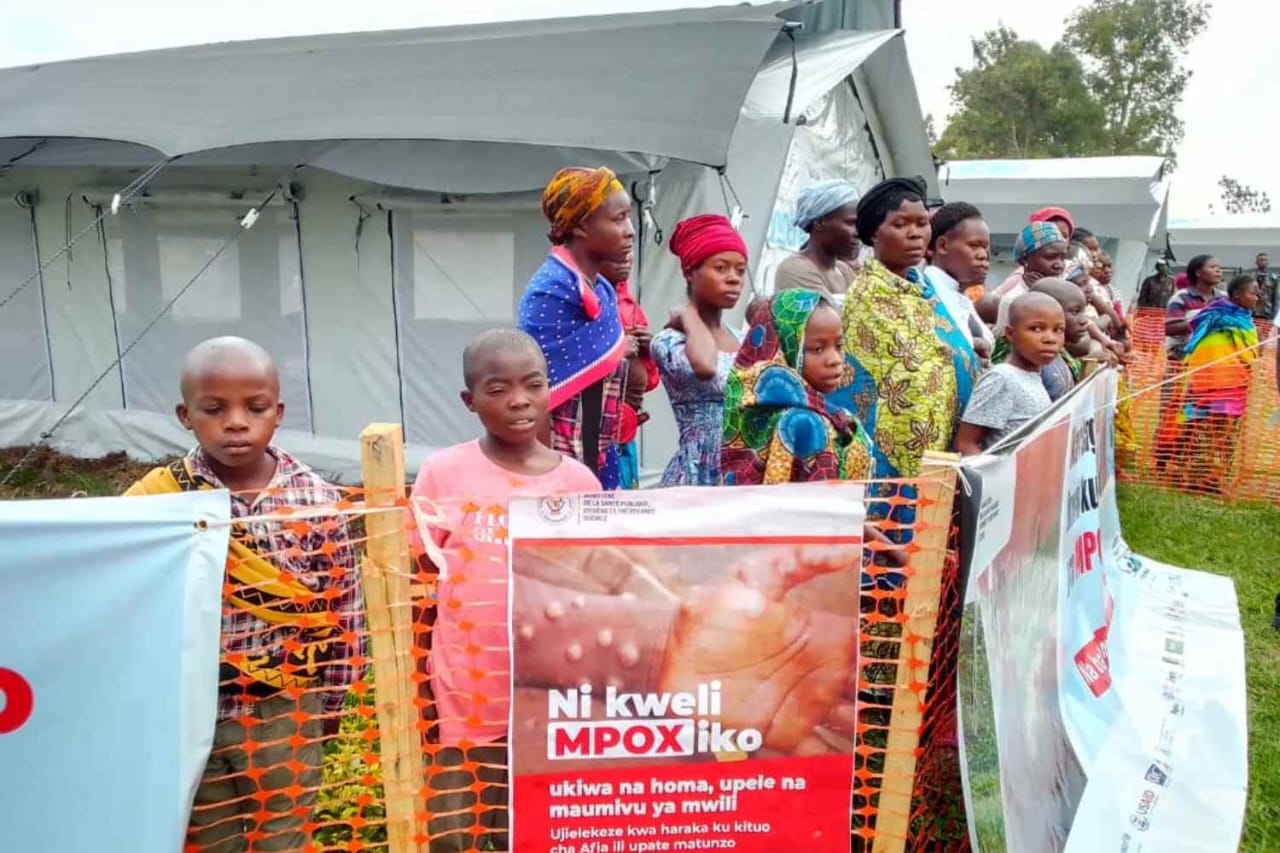

The Mpox virus disease is still present in the South Kivu province in the eastern DRC and continues to claim victims. Since the beginning of 2026, the province has reported 3,945 cases across 27 of its 34 health zones, including 3 deaths in Walungu, Uvira, and Kamituga respectively, according to health sources. In Kamituga, the province’s third-largest city located 180 km west of Bukavu (the capital of South Kivu) and the epicenter of Mpox, patients have been abandoned to their tragic fate. Evidently, all energies are now directed toward the fight against Ebola. Civil society is sounding the alarm, while the Provincial Health Division offers reassurance.
The lethality rate of Mpox is very low, but its spread remains active. « The Nyangezi health zone holds the top position with 1,015 reported cases and zero deaths, followed by Miti-Murhesa with 776 cases, Nyantende with 375 cases, and Kaziba with 368 cases. The other health zones have fewer than 150 cases, or even fewer than 10, » confirms Justin Bengehya, head of the health information, research, and communication office at the Provincial Health Division (DPS). He added: « In April 2026, Mpox was declared as no longer being a public health emergency in the country. However, the disease is still present in the province. »
Still Claiming Victims
In Kamituga, Mpox continues its steady path. According to local civil society, all the partners operating in the area have left. « It has been over four months since the partner ALIMA, which was handling this disease, closed its doors. Unfortunately, new cases are being recorded, and these patients are abandoned to their fate. There is no medication and no proper care. When healthcare workers were here, everything went well, and the population collaborated closely with them. Therefore, there is a need for another partner to come and continue the fight against Mpox, » pleads Pacifique Bengana, recording secretary for the Kamituga civil society.
While the situation in Kamituga is far from being under control, a certain stabilization is observed in other health zones. « After going through critical peaks, notably in 2025 when the province accumulated between 17,000 and 19,000 suspected cases, the epidemiological situation ‘shows signs of stabilization today,' » confirms Justin Bengehya.
Free Healthcare
The fatality rate has remained generally low (under 1% during major waves), limiting the total number of deaths to a few dozen across the province. This low mortality rate is explained by the implementation of completely free care for all patients, supported by the government and international partners like the WHO and Médecins du Monde. Thousands of patients have recovered, although tragic deaths still occur in cases of delayed care or complications (such as sepsis).
As of this July 2026, the infection curve is sharply declining according to comparative records from previous years. Since the start of 2026, just over 1,300 suspected cases have been recorded at the provincial level.
However, health authorities remain on high alert. A major scientific alert was shared by the DPS in mid-May 2026, warning against the co-circulation of two distinct virus strains in the territory. More than ever, strengthening laboratory surveillance, contact tracing, and adherence to basic hygiene measures remain essential to prevent an epidemic rebound in South Kivu.
Ebola Tackles Mpox
Although the Mpox crisis in South Kivu required international mobilization, it was quickly overshadowed by the financial, medical, and media arsenal historically reserved for the Ebola Virus Disease (EVD), a disease whose epicenter is the Ituri province but which is rapidly progressing, reaching the provinces of North Kivu, South Kivu, Haut-Uélé, and currently the Tshopo province.
« To those who think that Ebola has taken Mpox’s place in communication, I believe they are mistaken given the epidemiological profiles of the two diseases. Mpox seems to be under control in terms of both morbidity and mortality, whereas the Ebola virus disease is a new epidemic that the province has been facing since May 20, » reassures Justin Bengehya.
« We cannot confirm here that Ebola has replaced Mpox in terms of interventions. There are a few interventions that are currently ongoing; even though Ebola is here, we must follow up on it [Mpox] routinely rather than in a response phase, as it has been declared no longer a public health emergency of international concern, » Justin adds.
Anti-Ebola Measures Protect Against Mpox
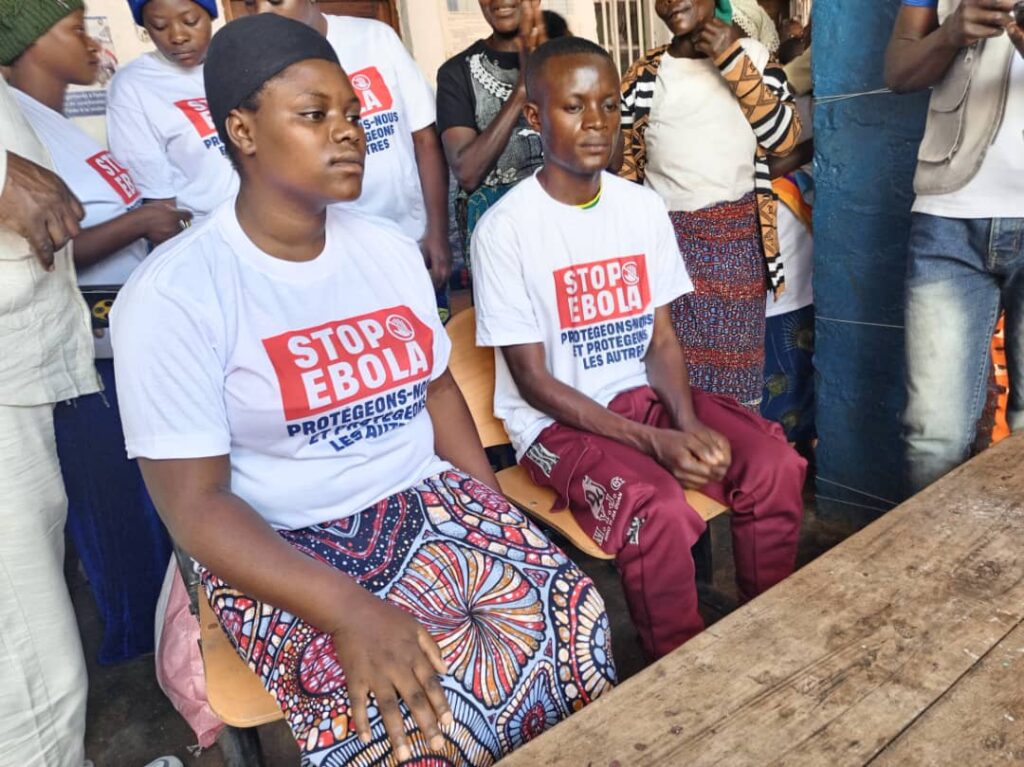
The Provincial Health Division encourages communities to mobilize to block Ebola’s path. Justin Bengehya recalls the barrier measures that must be observed.
« I encourage responders to first pursue the fight against Ebola, which is an epidemic. There are many interventions being carried out for Ebola that also protect against Mpox. All these hygiene measures must be respected—regular handwashing, in short, cleanliness. »
Ebola, a Global Health Issue
In terms of resources, Ebola instantly triggers an « emergency diplomacy » capable of raising envelopes of tens of millions of dollars from major global donors, whereas the Mpox response remains chronically underfunded, often struggling to gather even a third of the required funds. Regarding patient care, the asymmetry is just as glaring: while Mpox management was long limited to symptomatic support care and highly targeted vaccine distribution, Ebola benefits from decades of expertise in the DRC, materialized by highly secured Ebola Treatment Centers (ETC), strict isolation logistics, and major therapeutic advancements (monoclonal antibodies, highly effective vaccines).
Communication around Ebola crushes the public space; driven by a terrifying lethality rate, it benefits from an aggressive awareness architecture and heavily subsidized community engagement networks. Meanwhile, Mpox, hindered by taboos related to certain modes of transmission and its status as a historically neglected disease, suffers from a persistent lack of political and media attention.
Poor Communication, Lack of Trust
Whenever an epidemic is declared in the DRC, an aggressive communication campaign is organized to convince communities to collaborate. As soon as the disease is declared over, or if a more dangerous one develops, health actors do not return to explain to the community that the disease has ended. When they return for another epidemic, communities become resistant and think that health workers are coming to get rich off their backs for diseases that do not exist.
As a reminder, the history of the fight against Mpox (monkeypox) in South Kivu began in the mining town of Kamituga in the Mwenga territory. It was there that the Provincial Health Division (DPS) officially announced the very first confirmed case on October 12, 2023. This alarm marked the beginning of the spread of a new virus variant (Clade Ib), characterized by particularly active human-to-human transmission.
Declared a public health emergency of international concern by the WHO in 2024 due to the surge in cases, the Mpox epidemic in the DRC has recorded over 124,000 cases. To date, more than 1,557,268 people have been vaccinated, representing an estimated LC16 coverage of 46%.
Out of the 34 health zones in the South Kivu province, the epidemic has spread to affect more than half (at least 19 active zones). The entities of Kamituga, Miti-Murhesa, Nyangezi, and Uvira historically remain the most affected and heavily monitored. This virus spares no one, but children under 5 are the most affected, in addition to the direct contact transmission network. In areas of high overcrowding and mining hubs, physical and intimate contact was the main initial vector of spread before the disease became purely intra-familial and community-based.
Riky Ombeni
En savoir plus sur Mkulima Média
Subscribe to get the latest posts sent to your email.